The Lobito Corridor: How a $753M U.S.-Backed Rail Megaproject Is Redefining Central African Trade
With a $553 million senior loan from the U.S. DFC and strategic backing from the Partnership for Global Infrastructure, the Lobito Atlantic Railway connects the DRC’s mineral heartland directly to the Atlantic Ocean.
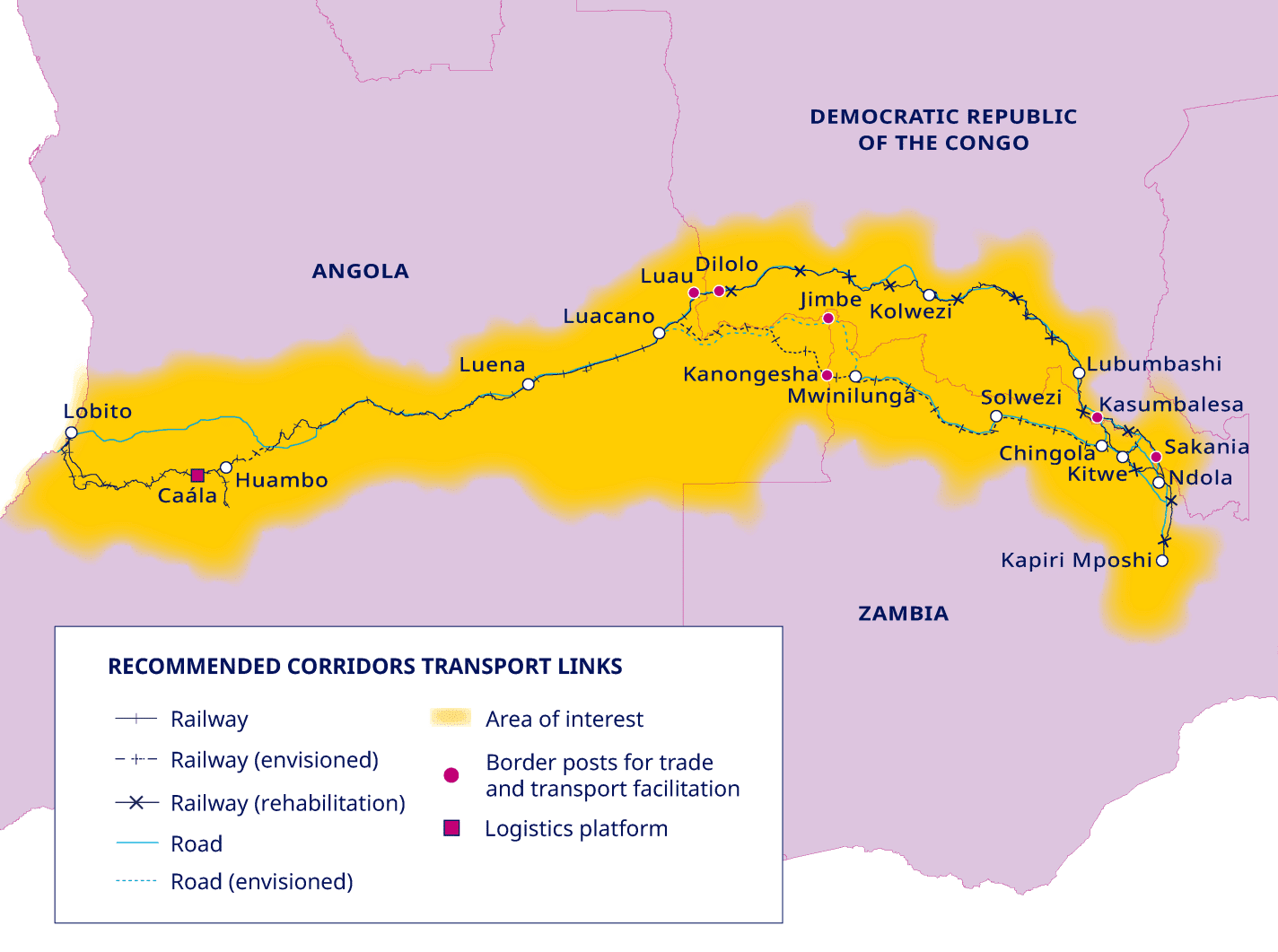
Official geographic alignment of the Lobito Corridor connecting the Atlantic Ocean to Kolwezi, Lubumbashi, and Sakania.
Source: U.S. International Development Finance Corporation (DFC) & PGI Geographic RecordsUnlocking the African Copperbelt with Direct Atlantic Access
For over a century, freight logistics across Central Africa’s Copperbelt suffered from extreme geographical bottlenecks. Moving high-purity copper cathodes and cobalt concentrates from Kolwezi and Lubumbashi to deepwater ocean ports routinely required three to six weeks of congested truck transport toward Indian Ocean harbors in South Africa or Tanzania.
The financial close of the $753 million financing package for the Lobito Atlantic Railway—spearheaded by a $553 million senior secured loan from the U.S. International Development Finance Corporation (DFC)—fundamentally transforms the logistics map of the African continent.
By providing an open-access heavy rail connection from the Atlantic Port of Lobito in Angola directly through to Kolwezi in the Democratic Republic of the Congo, the corridor establishes a secure, high-capacity economic lifeline connecting Central Africa to European and North American markets.
Slashing Transit Times from 30 Days to Under 36 Hours
The technical rehabilitation of 1,300 kilometers of railway line in Angola and its interconnection with the Société Nationale des Chemins de fer du Congo (SNCC) network slashes cargo transit times from approximately 30 days to less than 36 hours from the mine gate to the ocean vessel.
This dramatic acceleration frees up hundreds of millions of dollars in working capital previously trapped in transit. Furthermore, shifting mineral haulage from congested diesel truck fleets to modern diesel-electric and hybrid locomotives reduces freight transportation carbon emissions by up to 70%, creating a low-carbon corridor aligned with Western automotive ESG standards.
Flagship of the Partnership for Global Infrastructure and Investment (PGI)
The Lobito Corridor represents the premiere signature infrastructure project under the U.S.-led Partnership for Global Infrastructure and Investment (PGI). In coordination with the European Union, the African Development Bank, and the Africa Finance Corporation (AFC), the project exemplifies how democratic institutional capital delivers transparent, non-predatory infrastructure.
Beyond raw minerals, the railway is designed as a multi-sector economic development corridor. By incorporating agricultural feeder spurs, fiber-optic telecom backbones, and rural clean energy microgrids along the track alignment, the corridor stimulates commercial agriculture and industrial job creation across Katanga.
The U.S.-Congo Business Chamber actively advises American corporations, engineering EPCs, and heavy machinery suppliers seeking to participate in corridor expansion tenders and regional logistics hubs.
Engage Directly on This Bilateral Corridor
Connect with our executive advisory team to access private briefings, policy insights, and ministerial delegation access.
Request ConsultationRelated Executive Intelligence
Welcoming Migrants to the DRC: Félix Tshisekedi’s Strategic Gamble

Cobalt, Copper, and Ethical Supply Chains: The Strategic Imperative of Artisanal Mining Formalization